
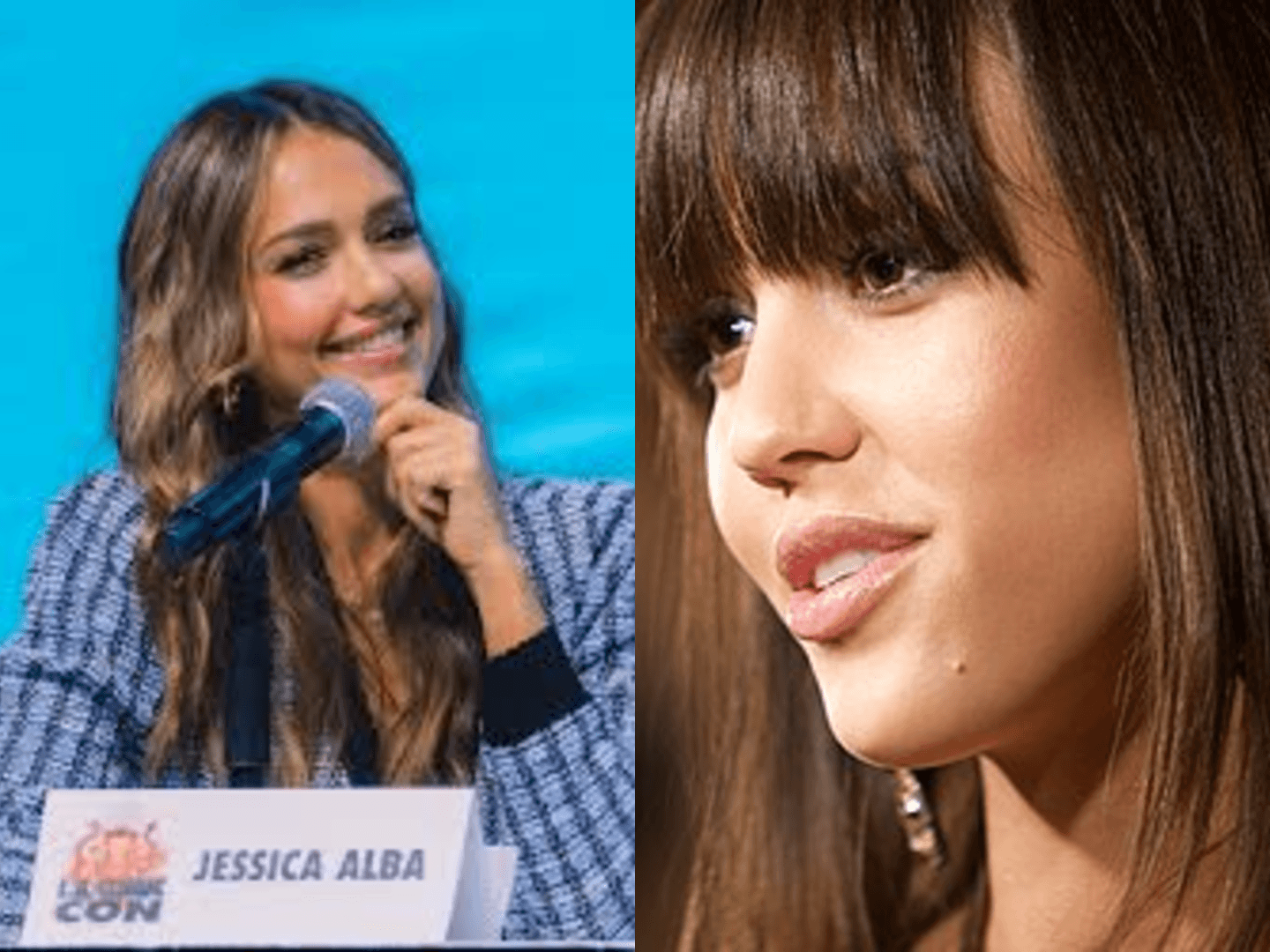
Jessica Alba’s ethnicity is a rich blend of Mexican-American heritage on her father’s side and diverse European ancestry on her mother’s side. Born on April 28, 1981, in Pomona, California, the actress and businesswoman has long been open about her multicultural background and how it has shaped both her career in Hollywood and her identity as a public figure .
The curiosity surrounding Jessica Alba’s ethnicity stems from her distinctive features and her prominent status as one of Hollywood’s most visible Latina actresses. Her father, Mark David Alba, who served in the United States Air Force, is of Mexican descent with roots stretching back to Spanish and Indigenous Mexican ancestors . Her mother, Catherine Louisa Jensen, brings a predominantly Northern and Western European heritage to the mix, with documented ancestry from Denmark, Wales, England, France, and Germany .
This combination makes Jessica Alba’s ethnicity a genuine reflection of the diverse, blended backgrounds that characterize many American families. Her story resonates with millions who share similar mixed-heritage experiences.
The Paternal Line: Mexican-American Roots and Cultural Pride
Jessica Alba’s father provides her with a deep connection to Mexican-American history and culture. Mark Alba’s family has roots in California that stretch back generations, with both of his parents born in the state . His ancestry includes Spanish colonizers, Indigenous Mexican peoples, and even Sephardic Jewish heritage, a common thread in many Mexican families with colonial-era backgrounds .
The actress has consistently embraced her Mexican-American identity throughout her career. In a 2017 essay published on PopSugar, Alba wrote about growing up surrounded by her extended family in California and feeling a profound connection to her Mexican-American roots. She described being raised in her grandmother’s house, surrounded by tias, tios, and cousins, which cemented her cultural identity from an early age .
Speaking on the PBS series “Finding Your Roots with Henry Louis Gates, Jr.” in 2012, Alba explored her ancestry more deeply alongside her father. The episode revealed the powerful family stories that shaped her connection to her Mexican heritage, including tales of her grandparents’ experiences as children of Mexican immigrants . She described her family as deeply traditional, Catholic, and Latin American in their values and customs .
This paternal heritage has been central to Alba’s public identity. She has frequently discussed how her Mexican-American background influenced her early career in Hollywood. When she began acting in the late 1990s and early 2000s, the entertainment industry struggled to categorize her mixed-race appearance. Alba has stated that casting directors often could not determine her ethnicity, which both limited and complicated her early opportunities .
The Maternal Line: European Ancestry Across the Continent
Jessica Alba’s mother, Catherine Jensen, comes from a family with deep European roots that span several countries. Her maternal ancestry includes Danish, Welsh, English, French, and German heritage . This European mix is characteristic of many white Americans whose ancestors immigrated to the United States over multiple generations.
The Danish component of her mother’s heritage adds a distinctly Scandinavian element to Alba’s genetic makeup. Meanwhile, the Welsh and English roots connect her to the British Isles, and the French and German ancestry ties her to continental Europe. This diverse European background combines with her father’s Mexican heritage to create a truly multicultural family history .
In 2009, during an appearance on the talk show “Lopez Tonight,” host George Lopez announced that a DNA test showed Alba to be approximately 87% European and 13% Indigenous American . While these percentages have been cited in various sources, a more detailed DNA analysis conducted for the PBS series “Finding Your Roots” provided a more comprehensive breakdown. That test revealed Alba’s admixture as 72.7% European, 22.5% Native American (specifically Indigenous Mexican including Mayan ancestry), 2% Sub-Saharan African, and 0.3% Middle Eastern or North African .
The Middle Eastern component was attributed by the series to Sephardic Jewish ancestry on her father’s side. This finding adds another layer of complexity to Jessica Alba’s ethnicity, demonstrating how genetic testing can reveal connections that traditional genealogical research might miss.
Note on sources: The net worth figure reflects estimates from Celebrity Net Worth via outlets like the Rock Hill Herald and In Touch Weekly. The separation from Cash Warren was publicly confirmed by Alba herself via Instagram in January 2025 .
How Jessica Alba’s Ethnicity Shaped Her Hollywood Career
Jessica Alba’s ethnicity has been both a challenge and a defining characteristic throughout her entertainment career. She began acting as a teenager and rose to fame with her breakthrough role as Max Guevara on the television series “Dark Angel” in 2000. Created by James Cameron, the show earned Alba a Golden Globe nomination and established her as a rising star in Hollywood .
However, Alba has been candid about the difficulties she faced as a mixed-race actress in an industry that often preferred clear racial categories. In a 2023 interview with ELLE magazine, she reflected on how Hollywood’s narrow beauty standards affected her career. She noted that when she was coming up, the industry was very Caucasian and lacked representation for actresses who did not fit a typical Anglo mold .
Despite these challenges, Alba carved out a successful career with notable roles in major film franchises. She starred as Sue Storm, the Invisible Woman, in the “Fantastic Four” films in 2005 and 2007 . She also appeared in Robert Rodriguez’s “Machete” in 2010 and took on comedic roles in films like “Good Luck Chuck” and “Valentine’s Day” . More recently, she starred in the television series “L.A.’s Finest” from 2019 to 2020 .
Breaking Stereotypes and Advocating for Representation
Throughout her career, Jessica Alba has used her platform to advocate for better representation of Latinos in media. She has been particularly critical of how Hollywood portrays Latin American communities. In her ELLE interview, she expressed frustration with the limited narratives available to Latino actors, noting that far too many stories frame the community in the context of drug cartels and domestic help .
Alba has emphasized that her grandparents lived through the era of the Great Depression and experienced extreme racism and segregation toward the Mexican American community. Surviving those challenging times meant her family often felt they needed to assimilate, keeping their culture and traditions confined to private spaces . This personal history has made her passionate about creating dignified, aspirational portrayals of Latino characters.
In 2024, Alba appeared on the podcast “A LA LATINA,” where she discussed her journey as an authentically Latina actress and businesswoman . She has also been recognized for her achievements beyond entertainment. In 2021, she became the youngest Latina to take a company public when The Honest Company, which she co-founded, went public .
The Scientific Perspective on Alba’s Ethnicity
The DNA analysis conducted for “Finding Your Roots” provides the most authoritative scientific perspective on Jessica Alba’s ethnicity. The test was administered as part of the acclaimed PBS genealogy series, which has featured numerous celebrities exploring their family histories .
According to the results, Alba’s genetic makeup is predominantly European at 72.7%, with a significant Indigenous Mexican component of 22.5% . The test also revealed small percentages of Sub-Saharan African, Middle Eastern, and South Asian ancestry. The Middle Eastern component, while only 0.3%, was credited to distant Sephardic Jewish ancestry on her father’s side .
These scientific findings align with what is known about Mexican history. The Spanish colonization of Mexico in the 16th century created a population with mixed European and Indigenous ancestry. Many modern Mexicans, like Alba’s paternal ancestors, carry genetic markers from both Spanish colonizers and native peoples. Additionally, the presence of Sephardic Jewish ancestry in Mexico is well documented, as many Spanish Jews converted to Catholicism or fled to the New World to escape persecution.
How Alba’s Background Compares to Other Latina Celebrities
Jessica Alba’s mixed ethnicity reflects a growing trend among prominent Latina actresses in Hollywood. Figures like Jennifer Lopez, Salma Hayek, and Eva Longoria have all navigated similar challenges regarding representation and stereotypes . However, Alba’s specific combination of Mexican and Northern European ancestry has at times made her identity more complex in the eyes of audiences and casting directors.
Alba has spoken about how her appearance sometimes complicated her casting, as she did not fit neatly into established categories. She has worked to redefine what “the girl next door” looks like in American media, pushing back against the idea that leading ladies must be Anglo or Caucasian . Her success has helped pave the way for other mixed-race actresses to find roles that reflect their diverse backgrounds.
Embracing Heritage and Identity Today
In recent years, Jessica Alba has become increasingly vocal about embracing her Mexican-American heritage. In her 2023 ELLE interview, she praised younger generations of Latinas, such as Rachel Zegler and Selena Gomez, for confidently celebrating their cultural identities . Alba expressed joy in seeing young people refuse to be whitewashed and standing up against erasure of their heritage.
Her journey from a young actress struggling with Hollywood’s expectations to a successful businesswoman and advocate has been defined by her commitment to authenticity. She has stated that embracing her identity was crucial in shaping her confidence and sense of purpose . Whether through her acting roles, her entrepreneurial endeavors, or her public statements, Alba continues to highlight the importance of representation and cultural pride.
Conclusion
Jessica Alba’s ethnicity is a beautiful example of America’s multicultural fabric. With Mexican roots on her father’s side that include Spanish, Indigenous, and Sephardic Jewish ancestry, and European heritage on her mother’s side spanning Danish, Welsh, English, French, and German origins, her background defies simple categorization .
The actress has navigated the complexities of her mixed identity with grace and determination. From her early days on “Dark Angel” to her recent work as a producer and businesswoman, Alba has consistently challenged Hollywood’s narrow definitions of beauty and representation . Her willingness to speak openly about both the challenges and gifts of her heritage has made her an important voice in conversations about diversity in entertainment.
As DNA testing and genealogical research continue to reveal the intricate connections between different populations, stories like Alba’s remind us that ethnic identity is rarely simple. Her mixed Mexican and European ancestry represents the layered history of the Americas, where colonization, immigration, and cultural exchange have created rich, complex family histories. For Alba, embracing all of these elements has been essential to both her personal identity and her professional success.1. What is Jessica Alba’s ethnicity?
Jessica Alba’s ethnicity is a mix of Mexican-American heritage on her father’s side and diverse European ancestry on her mother’s side. Her father is of Mexican descent with Spanish, Indigenous Mexican, and Sephardic Jewish roots, while her mother has Danish, Welsh, English, French, and German ancestry.
2. Is Jessica Alba Hispanic or Latina?
Yes, Jessica Alba is Hispanic and Latina through her father’s Mexican-American heritage. She has consistently identified as Mexican-American and has spoken publicly about her pride in her Latin roots and her family’s cultural traditions.
3. What did DNA testing reveal about Jessica Alba’s ancestry?
A DNA analysis conducted for the PBS series “Finding Your Roots with Henry Louis Gates, Jr.” revealed Alba’s genetic makeup as approximately 72.7% European, 22.5% Indigenous Mexican, 2% Sub-Saharan African, and 0.3% Middle Eastern or North African, with the latter attributed to Sephardic Jewish ancestry.
4. How has Jessica Alba’s ethnicity affected her acting career?
Alba has stated that her mixed-race appearance often confused casting directors in the late 1990s and early 2000s, as Hollywood struggled to categorize her. She has spoken about facing limited opportunities and stereotypes but eventually built a successful career in films like “Fantastic Four” and the series “Dark Angel.”
5. Does Jessica Alba speak Spanish?
While Jessica Alba has Mexican heritage, she has not been identified as a fluent Spanish speaker in public interviews. She has discussed growing up in a traditional Mexican-American household but has primarily conducted her public life and career in English.
